

Most conversations about Israeli tech start with the military angle. Unit 8200. Cyber. Intelligence. We've heard it.
That narrative is accurate as far as it goes — but it misses something more operationally relevant for anyone trying to scale a SaaS product or a B2B brand globally.
The marketing agencies built here — inside this small, hyper-competitive, export-driven economy — are structurally different from what you find in London, New York, or Berlin. And the difference shows up where it matters: in pipeline, in CAC, in attribution, and in retention.
This isn't a post about national pride. It's an analysis of the structural conditions that produce a specific kind of marketing operator — and why that matters if you're building a product for the global market.
1. The Market Is Too Small to Survive on Local Clients
Israel's domestic market is roughly the size of a mid-tier American metro. There aren't enough Israeli buyers to sustain a growth-stage SaaS company, let alone a marketing agency that wants to build real expertise.
That constraint forces something most agencies in larger markets never experience: you have to win globally, or you don't survive. From day one.
The result is a population of agencies that have been running US-market, UK-market, and EU-market campaigns for years — often before many Western agencies had clients with that kind of international appetite. Israeli agencies didn't go global when it was strategic. They went global because there was no other option.
When you've been managing LinkedIn campaigns targeting VP-level buyers in San Francisco from Tel Aviv for five years, you develop a calibration most agencies simply don't have.
2. The B2B SaaS Density Is Unprecedented
Per capita, Israel produces more B2B SaaS companies than almost any country on earth. The pipeline of clients that need to grow from $0 ARR to Series A, then to $10M ARR and beyond, is constant. That density creates something valuable:
Agencies here develop deep pattern recognition for the specific problems that SaaS companies face at each growth stage. Not in theory. In practice — with real spend, real pipelines, real attribution stacks.
At Terrific Digital, we've worked with companies at pre-launch POC stage all the way through to unicorn exit. That range isn't accidental. It reflects the breadth of the market we operate in. We've seen what the funnel looks like when you're trying to generate your first 100 qualified leads. We've also seen what happens when attribution breaks at scale — and how to fix it without losing months of optimization signal.
Most agencies in larger markets specialize by channel — PPC, paid social, SEO. Israeli agencies tend to specialize by growth stage and revenue model, because the client base demands it.
3. Technical Depth Is Table Stakes, Not a Differentiator
Israeli agencies aren't technical because they've invested in it as a positioning strategy. They're technical because their clients are technical — and clients call them out immediately if they're not.
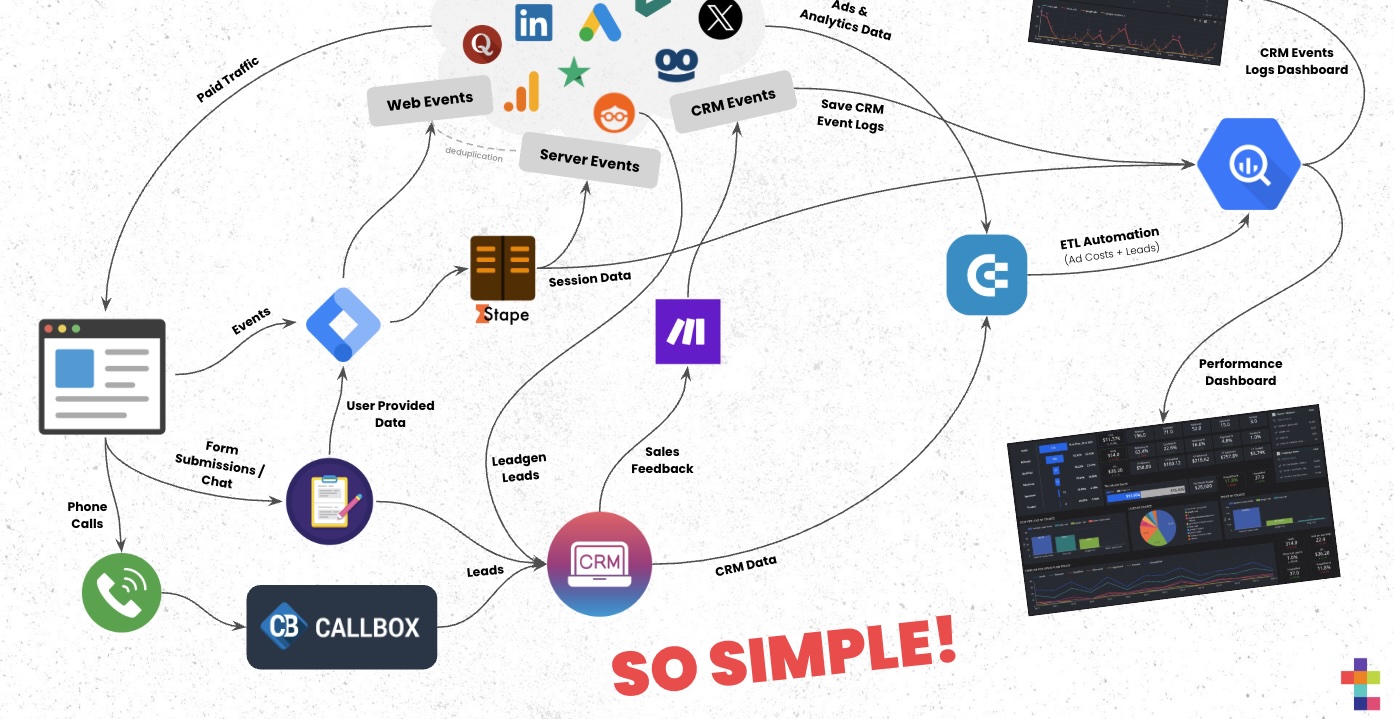
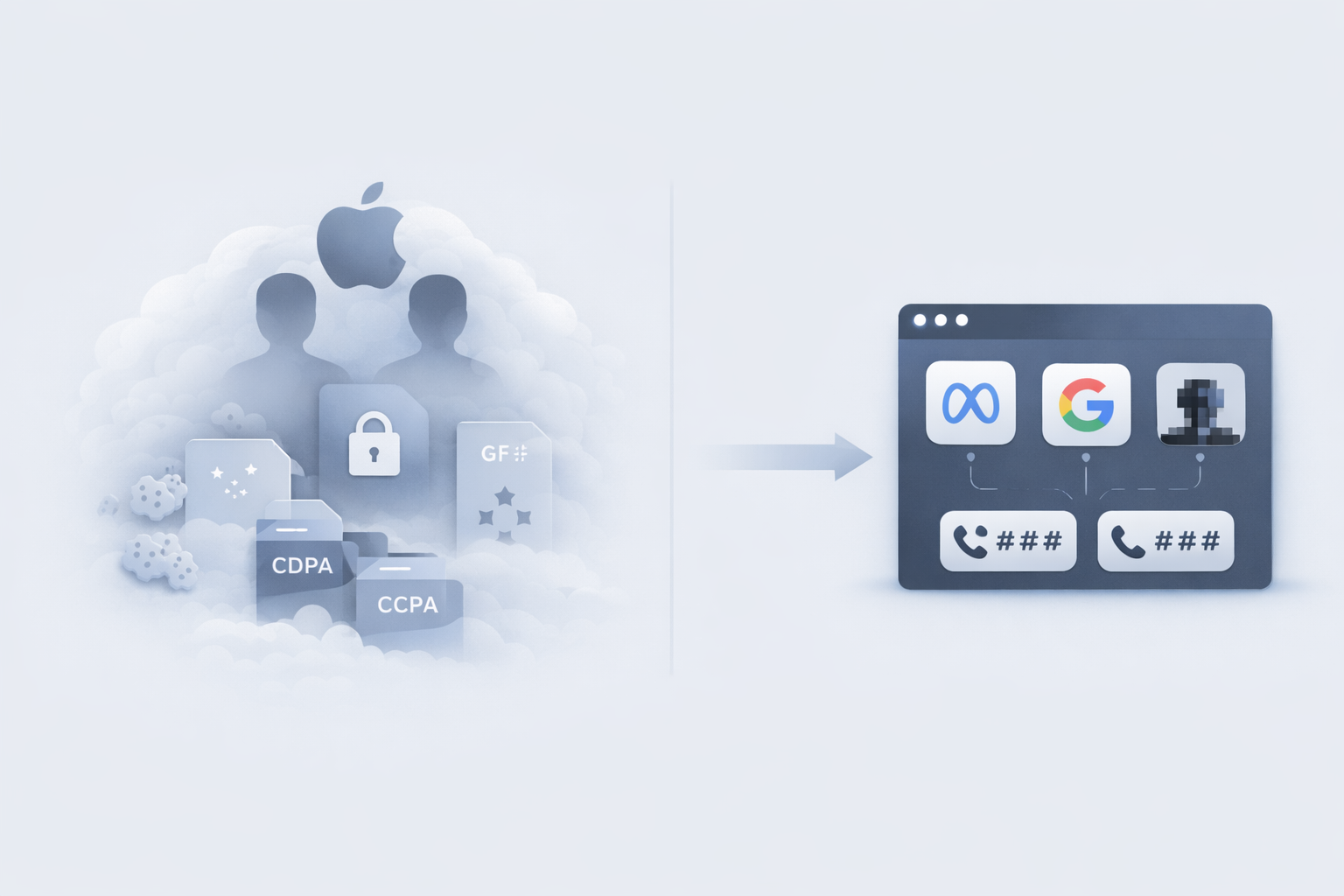
When your client's growth team includes former engineers, data scientists, and product managers, you can't run opaque black-box campaigns. You have to explain your logic. You have to build infrastructure that integrates with their stack. You have to know what server-side tracking means and why it matters in a world where iOS attribution is broken and GA4 is unreliable.
That pressure produces genuine technical fluency. Not the kind that shows up in a capabilities deck. The kind that shows up in a tracking audit, a CRM integration, or an attribution model that actually reflects revenue.
Concretely: the agencies built here tend to run full-funnel infrastructure — from pixel implementation and GTM configuration to CRM syncing, CAPI setup, and offline conversion imports. That's not a premium add-on. It's the baseline.
4. The Culture Compresses Timelines
Working style in Israeli companies is direct. Decisions get made fast. There's low tolerance for process theater and high tolerance for iteration.
That culture transfers directly into how campaigns get run. When a campaign is underperforming, the conversation isn't about who owns the decision. It's about what we're changing and when. When a test produces a signal, it gets acted on — not scheduled for next quarter's planning cycle.
For growth-stage companies where speed of learning is a competitive advantage, this matters. CAC compresses when your agency treats every week as a data point, not every quarter.
Founders who've worked with agencies in other markets often describe the shift as jarring at first. They're not used to an agency that pushes back on their assumptions, questions their ICP definition, or tells them directly when their landing page is the constraint — not the campaign.
5. Startup Exits Create a Knowledge Loop
Israel has produced a disproportionate number of startup exits — IPOs, acquisitions, and venture-backed scale-ups that have gone global. Each of those exits is a knowledge transfer event.
The marketers and growth operators who worked those journeys don't disappear. They come back into the ecosystem — as agency founders, as in-house CMOs who then hire agencies they trust, as advisors who know which vendors actually perform.
This creates a compounding loop: the agencies that help scale companies through exits develop institutional knowledge that doesn't exist anywhere else. They know what the funnel looks like at Series B. They know what breaks when you try to expand from Israel to the US market. They know which channels work for which ICPs at which ACV thresholds.
6. Attribution Pressure Made Israeli Agencies Accountability-Obsessed
Global clients don't care where your agency is located. They care whether you can tie spend to revenue. Israeli agencies — selling to demanding, skeptical, data-literate buyers overseas — got held to that standard early.
The result is an obsession with measurement infrastructure that many Western agencies still treat as optional. Server-side tracking, consent-mode configuration, CRM integration, offline conversion APIs — these aren't capabilities you unlock at a certain client size. They're the starting point.
Because when your client's CFO asks why CAC went up 30% last quarter, "the tracking isn't perfect" is not an answer that keeps the contract.
What This Actually Means If You're Looking for an Agency
None of this is an argument that Israeli agencies are uniformly better than everyone else. There are weak agencies everywhere, and Israel is not exempt.
The argument is structural: the conditions that shaped Israeli performance marketing — small domestic market, B2B SaaS density, technical clients, accountability pressure, exit knowledge loops — produce a specific kind of operator that is particularly well-suited to global SaaS and B2B growth.
If you're building a B2B product targeting the US or European market, and you want an agency that treats your budget like it's their own, operates with technical depth as a baseline, and moves fast without losing measurement rigor — you should at minimum be evaluating what's coming out of Tel Aviv.
We work with a small number of high-growth clients at any one time. If you want to explore what this looks like in practice — request an audit and let's look at what's actually happening in your funnel.
FAQ: Israeli Marketing Agencies
Are Israeli marketing agencies good for international B2B campaigns?
Yes. Israeli agencies have been running US and EU-market B2B campaigns for years — not by choice but by necessity, since Israel's domestic market is too small to sustain growth. This produces agencies with deep calibration for international buyer behavior, LinkedIn and search campaign management for English-speaking ICPs, and full-funnel infrastructure that integrates with standard global GTM stacks.
What makes Tel Aviv a hub for performance marketing?
Tel Aviv's performance marketing ecosystem is driven by three factors: a high density of B2B SaaS companies that require growth-stage marketing expertise, a culture of technical rigor inherited from the broader Israeli tech sector, and constant pressure from internationally-distributed clients who demand measurable results tied to revenue, not vanity metrics.
Do Israeli agencies work with companies outside of Israel?
The majority of Israeli performance marketing agencies primarily serve clients outside Israel. Most work with US-based, EU-based, or globally distributed startups and scale-ups. The client base is international by default.
What is Terrific Digital and where is it based?
Terrific Digital is a boutique performance marketing agency based in Tel Aviv, Israel. The agency specializes in B2B, SaaS, and lead generation campaigns, with services covering paid media, tracking infrastructure, CRM integration, creative, and marketing automation. The agency has managed over $52M in ad spend and works with a small roster of high-growth clients at any given time.
Why do Israeli agencies tend to be technically strong?
Israeli agencies serve technically sophisticated clients — often companies founded by engineers or backed by technical investors. Those clients hold agencies accountable for their infrastructure, not just their creative. That accountability pressure drives agencies to develop genuine technical depth in tracking, attribution, server-side implementation, and data infrastructure as baseline competencies rather than premium offerings.