
A few years ago, digital advertising was simple.
You clicked an ad.
Platforms tracked you across the web.
Conversions were recorded with near-perfect confidence.
Marketers celebrated clean attribution reports.
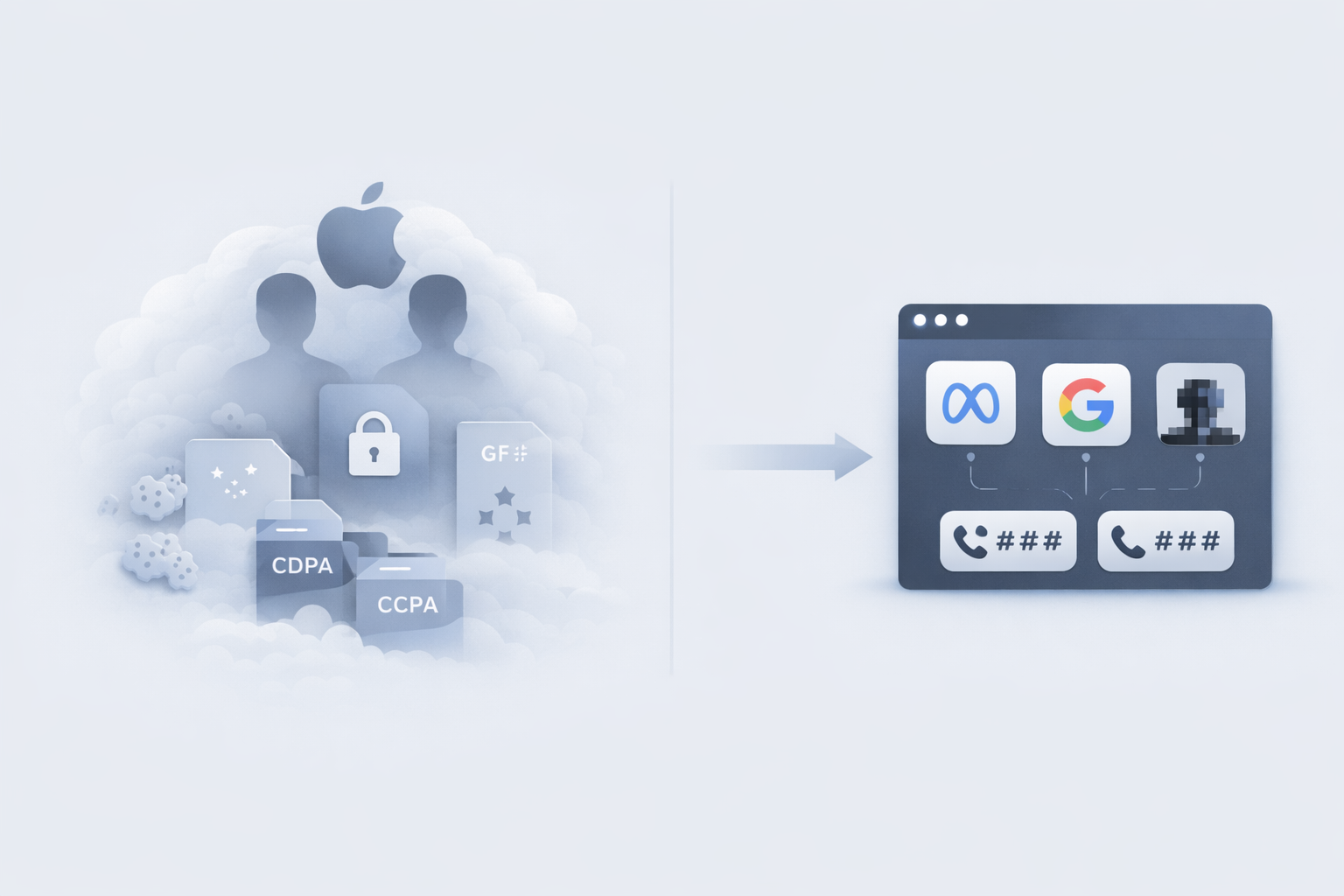
Then Apple said, “Nope.”
iOS 14.5 introduced App Tracking Transparency.
Browsers tightened privacy controls.
Third-party cookies started disappearing.
Regulators enforced GDPR, CCPA, and similar frameworks worldwide.
Overnight, the data landscape changed.
What Actually Broke?
Conversions did not suddenly stop happening.
Tracking did.
Reports began filling up with:
- Unattributed conversions
- Unknown sources ("Not set")
- Inflated direct traffic
- “Dark” conversions that platforms could not connect to ad clicks
Meanwhile, performance algorithms lost visibility.
And when algorithms lose signal, performance suffers.
Less signal means:
- Slower learning
- Poorer optimization
- Higher CPAs
- Lower scale
It was not that your ads stopped working.
It was that the feedback loop got weaker.
How Google and Meta Responded
Faced with massive signal loss, platforms shifted responsibility back to advertisers.
If browser-based tracking could no longer be trusted, the signal needed to come from somewhere stronger.
That solution is called: Enhanced Conversions.
What Enhanced Conversions Actually Do
Instead of relying only on browser cookies, you send first-party customer data back to the platform.
For example:
- Email addresses
- Phone numbers
These are securely hashed before transmission.
The platform then matches that hashed data to known users who clicked or viewed your ads.
What happens next?
- Attribution improves
- Match rates increase
- Optimization signals strengthen
- Performance stabilizes
You are no longer asking the platform to “guess” who converted.
You are giving it a missing piece of the puzzle.
Why This Matters More Than Ever
In a privacy-first world, signal loss is permanent.
Waiting for things to “go back to normal” is not a strategy.
Advertisers who implement enhanced conversions and first-party data pipelines are effectively restoring part of the visibility that was lost post-iOS 14.5.
Advertisers who do not?
They are running campaigns with partial information.
It is like trying to win a Formula 1 race with one eye closed.
The Real Question
Are you still letting ad platforms guess who converted?
Or are you feeding them the data they need to optimize properly?
In 2026, performance marketing is not just about creative and media buying.
It is about signal engineering.
And the advertisers who rebuild their signal advantage are the ones who consistently outperform.