
Over the past 8 years of running lead generation campaigns, I can honestly say we have seen almost everything.
Budgets ranging from a few thousand dollars per month to millions.
Industries from deep tech to cosmetics.
Massive enterprises to early stage startups that later became unicorns.
B2B and B2C alike.
And every single time, we discovered that the real challenge is always the same:
🎯 How do you measure what is actually working?
🏆 How do you define success?
💸 Where is the budget leaking?
🤑 Which campaigns are generating revenue - and which ones are just keeping your sales team busy?
Why Lead Generation Is Harder Than It Looks
In lead generation, digital marketing becomes significantly more complex.
The most important business action does not happen on the website. It happens inside the CRM, in conversations between prospects and sales teams.
Unlike SaaS or ecommerce, where revenue can be tracked directly online, the real money in lead gen often happens offline. That creates a serious measurement gap.
And here is the uncomfortable truth:
Measurement in digital marketing has become overly technical and increasingly inaccessible to the average marketer - no matter how experienced they are.
The problem is that proper measurement is not a "nice to have". It is mandatory.
It is the difference between:
- Optimizing for "number of leads" based on shallow website conversions
- And measuring real lead quality, closed deals, and actual revenue - in a way that enables consistent month over month improvement
Built in the Real World - Not in Theory
At Terrific Digital, we have spent years building measurement frameworks that create exactly this difference for our clients.
And when I say these methods were written in blood, I mean it.
They were shaped by hard lessons and real conclusions drawn from managing hundreds of millions of dollars in ad spend through our agency.
We Decided to Share Our Entire Approach
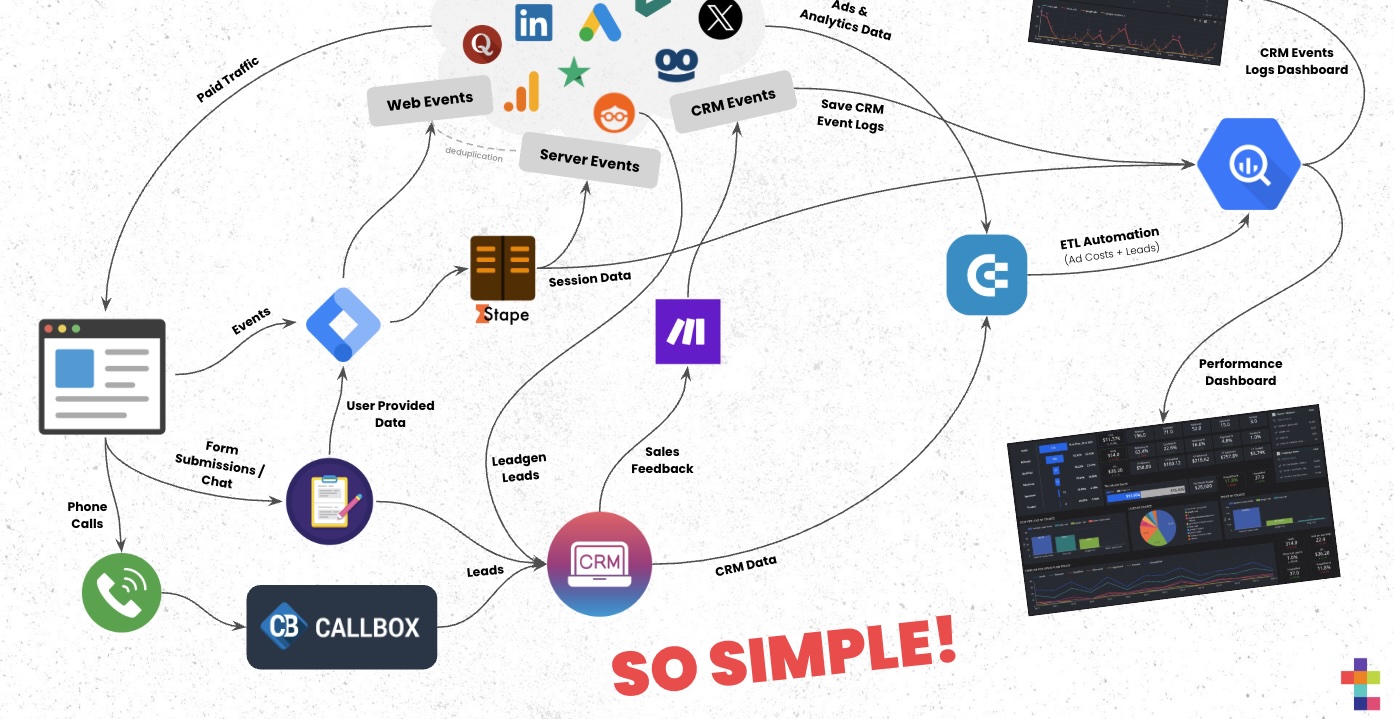
In a recent webinar I hosted with my partner Matan Gaash, we broke down exactly how we approach building lead generation infrastructure:
- Our full tech stack
- Where things typically break
- Why these failure points matter
- And why you should care in the first place
Honestly, I can barely believe we are giving this away for free.
But here it is.
Free access to the full recording and the presentation - on me.
Enjoy 👇